A New Perspective for Anthropology & Sociology Both
|
 |
 |
 |
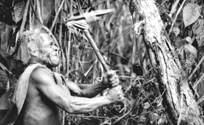 |
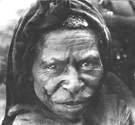
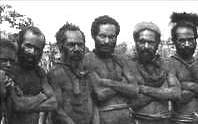
Oksapmin Society and World ViewColumbia University Department of Anthropology, 1973 ABSTRACTThis dissertation describes the newly contacted people of Oksapmin in the West Sepik District of Papua New Guinea, who live in a mountainous region between the headwaters of the Fly and Sepik Rivers.The researcher collected ethnographic data, especially economic information, for two hypotheses he came to before entering the field. Upon return, the researcher began to study the method of Aesthetic Realism with Eli Siegel, the principal statement of which is, "The world, art, and self explain each other: each is the aesthetic oneness of opposites." This made for a change of orientation, including further study of aesthetic and configurational approaches to which he had earlier been exposed. They include those of Ruth Benedict, Margaret Mead, Alfred L. Kroeber, and Claude Levi-Strauss. It gradually became clear that Oksapmin culture is an aesthetic oneness of opposites. This perception, as ethnographic description, is in the first part of this dissertation as Oksapmin society and culture are presented. The second part is a detailed analysis of Gwe Parish economics including the effect on children of inequalities of wealth among their fathers. Personal feeling and impersonal statistics are here. Part three describes the anthropologist's change of orientation upon return from the field. It is the detailed theoretical basis for the fourth part. Part four is an analysis through opposites of Oksapmin culture. In particular, the opposites recurrent in all phases of Oksapmin life, and central to explaining its aesthetic basis, are Self and World, For and Against, and Separation and Junction. These are among the opposites described by Eli Siegel as necessary to understanding the relation of world, art and self. Oksapmin economics, to present one instance of Oksapmin society and world view, is based on two opposite feelings: one, that a person's own good comes from being against others, and the opposite, that it comes through usefulness to others. This duality and its resolution in art, is in for example, the Oksapmin story "The Man with Pink Skin," and can also be seen as resolved in arrow carvings, dance, poetic lines: in them elements separate, clash, and join. Oksapmin society itself in its abstract structure solves the aesthetic problem and also life problem: How can things or people join and remain individual at once? The researcher believes that describing a culture in terms of its aesthetic structure makes for explanation of how such diverse fields as its dance, agriculture, folklore, kinship, economics, and ethics are related. Copyright © 2001-2016 by Arnold Perey. All rights reserved
|